
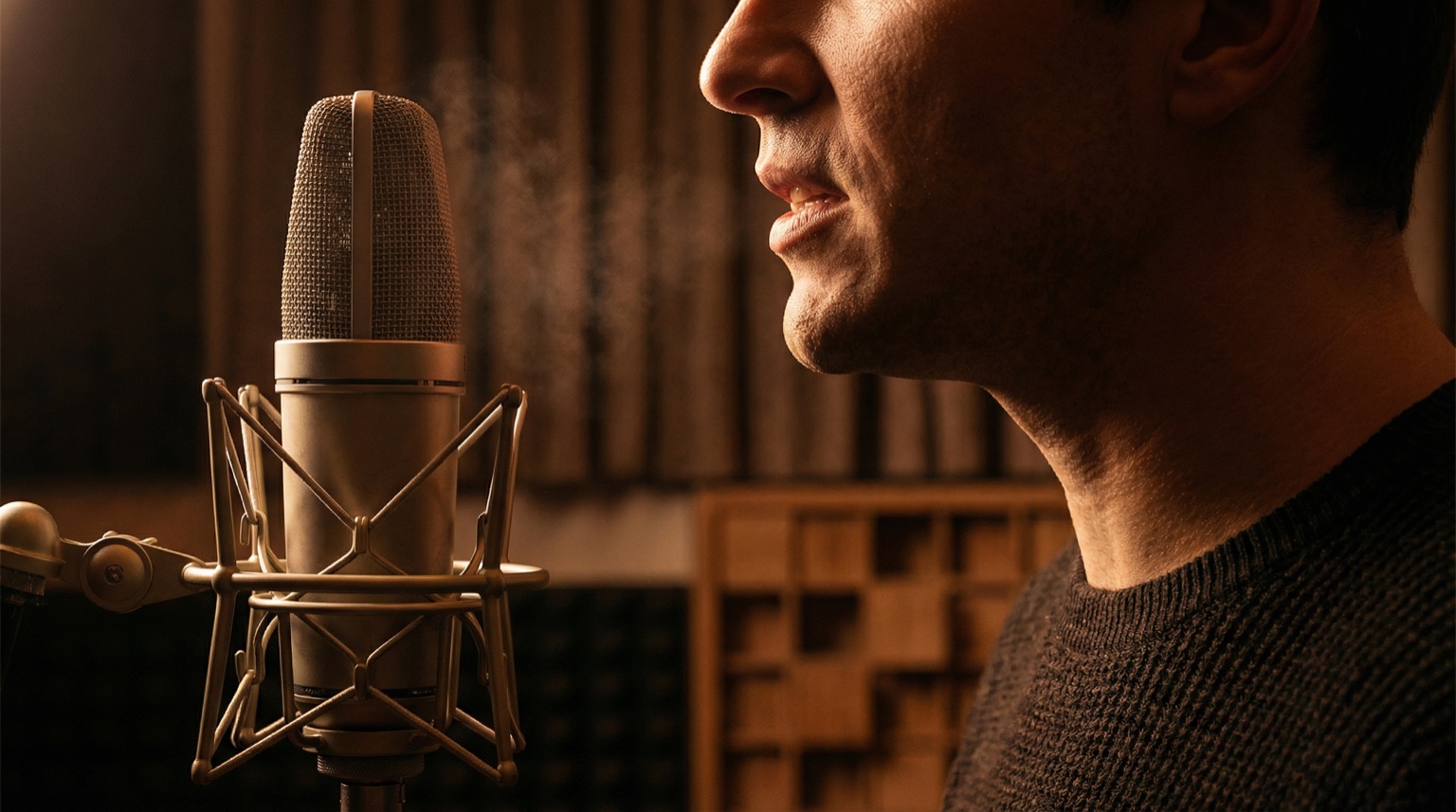
Vocal fry is a phonation mode where the vocal cords vibrate in the glottal pulse register at a very low frequency, producing a creaky, popping sound. In voice-over production, it matters because sustained fry patterns reduce intelligibility, create listener fatigue, and are rarely acceptable in corporate narration or e-learning.
The most important points in brief
- Vocal fry is a real physiological mode, not a defect. It becomes a production problem when it's sustained or uncontrolled.
- It's caused by insufficient breath support, vocal fatigue, dehydration, or habit. Not by poor technique alone.
- In most professional voice-over (corporate, e-learning, broadcast), it needs to be managed out. In character work or certain ad styles, it can be intentional.
- Management happens in three places: pre-recording (physiology and technique), during recording (directing and breath work), and in post-production (editing or selective re-takes).
What it is: the glottal pulse register
Vocal fry is technically called the pulse register or glottal fry. It occurs when the vocal cords vibrate at their lowest possible frequency, typically below 50 Hz. Instead of a clean, regular vibration, the cords crack open between pulses, creating that characteristic creaky or popping sound.
You hear it most often at the end of sentences or when someone's voice trails off. It's distinct from a low register. A low register is a controlled phonation mode. Vocal fry is a break in phonation control.
In the recording booth, you recognize it as irregular clicks or pops between words, or a sustained crackle that underlies the voice. Sometimes it's subtle. Sometimes it's pronounced enough that it breaks up intelligibility.
How it works: what causes it physiologically
Vocal fry occurs when several conditions align:
- Insufficient breath pressure. The vocal cords are not being driven by enough air. They vibrate erratically instead of cleanly.
- Vocal fatigue or tension. When the larynx tightens or the voice grows tired mid-session, the cords fall into fry patterns more easily.
- Dehydration. Dry vocal cords are less elastic. They collapse more readily between pulses, triggering fry.
- Habit or tension pattern. Some people default to fry at the end of phrases. Others have it baked into their speaking pattern.
- Low lung volume. Running through sentences on residual breath (the breath left after exhalation) drops air pressure below the threshold needed for clean phonation.
In a recording context, you'll notice it appearing most often when:
- The session has been running for 2–3 hours without proper breaks.
- The voice actor is reading through quickly without resetting breath between lines.
- The room is dry or the talent hasn't hydrated.
- There's tension in the shoulders or jaw.
When it matters: effect on voice-over quality and listener perception
Vocal fry becomes a production issue depending on the context and the degree of control.
When it's a problem:
- Corporate voice over and explainer videos. Any sustained fry undermines authority and clarity. Listeners interpret it as lack of engagement or uncertainty.
- E-learning and long-form content. Fry creates listener fatigue because the ear works harder to track the irregular vibration. Over 20 minutes, it becomes noticeable and distracting.
- Broadcast and high-end production. Zero tolerance. Any audible fry or crackle is flagged in QA.
- Public sector and government content. Professional standards demand clean phonation throughout.
When it may be acceptable or intentional:
- Character voice work. Fry can define a character's age, attitude, or vulnerability.
- Certain advertising styles. Some ad copy deliberately uses a conversational, imperfect delivery where subtle fry fits the tone.
- Dramatic narration. A moment of vocal fragility can serve the story.
The key difference is control. Intentional fry is a choice. Uncontrolled fry is a liability.
What you should do: management across the production chain
Before the recording session
- Hydrate. Start hydrating 24 hours before the session. Drink water consistently, not just right before recording.
- Assess breath support. Do a few warm-up phrases and listen for fry. If it appears early, it's usually a breath pressure issue.
- Relax the jaw and shoulders. Tension locks the larynx. Roll shoulders, open the jaw gently, and take three deep diaphragmatic breaths before you start.
- Plan breaks. For sessions longer than 45 minutes, schedule 10-minute breaks every 30–40 minutes. Your voice will stay cleaner and fry will stay minimal.
During recording
- Reset breath between lines. Don't chain sentences together on falling breath. Take a full breath after each line, even if the script doesn't call for it.
- Direct from diaphragm support. If you hear fry creeping in, the fix is not to "open your throat more" or "speak lower." It's to increase breath pressure. "Support from the belly" is the practical direction.
- Keep the end of sentences clean. This is where fry most often appears. Consciously maintain breath pressure all the way through the last word, then reset.
- Monitor for fatigue. After 90 minutes of solid recording, fry often creeps in. That's the signal to take a break or wrap that section.
In post-production
- Edit selectively. If fry appears in only a few words, re-recording those lines is usually faster and sounds more natural than trying to remove it with processing.
- Use editing as a filter for intent. If sustained fry is in the take, it signals that the recording didn't meet technical requirements. Return to the booth rather than trying to "fix" it.
- Avoid aggressive processing. Removing fry with EQ or gating almost always damages the voice's presence and intelligibility. It's not a good trade.
Next steps
If vocal fry is showing up consistently in your recordings, the issue is almost never the microphone or the room. It's breath support or vocal fatigue. Build in warm-up time, take proper breaks, and focus on full breath pressure through the end of each phrase.
If you're casting voice talent for a project and want to ensure clean delivery, mention that sustained vocal fry is not acceptable in your specification. Most professional voice actors know how to manage it. If it persists in their takes, it's a signal that the project may need a different voice or a different approach.
For more detail on delivery standards and what to listen for, see my guide on broadcast quality voice-over requirements and delivery. For e-learning specifically, see e-learning voice: tempo, structure and file format in practice.
You can hear examples across contexts in my demos. If you want to discuss technical specifications or casting for a project, contact me.
FAQ
Is vocal fry a sign of a bad voice?
No. Vocal fry is a phonation mode. Every voice can access it. The question is whether it's controlled. Professional singers, speakers and voice actors manage it by using proper breath support and taking strategic breaks.
Can vocal fry damage my voice?
Occasional fry is harmless. Sustained tension that creates chronic fry can lead to fatigue or strain over time. The issue is usually the underlying tension or breath pressure problem, not the fry itself. Fixing the breath support resolves it.
Is there a microphone or room technique that prevents vocal fry?
Not directly. Fry is phonation. The microphone captures what you produce. If fry is in the voice, no mic technique removes it without side effects. The solution is at the source: breath support and fatigue management.
Why does vocal fry show up more at the end of sentences?
Air pressure drops as you exhale. By the end of a sentence, you're on your residual breath. If you don't consciously maintain breath support, the vocal cords fall into fry. Reset your breath between lines.
Should I ask for re-takes if I hear fry in a delivery?
Yes, if it's sustained or uncontrolled. If it's one or two pops on a specific word, you can edit it out. If it's a pattern in the take, re-recording that section will give you a cleaner result than post-processing.
Can I request a specific technique during a session to prevent fry?
Yes. Direct from breath support and full phonation, not from "opening the throat" or "speaking lower." If you hear fry, ask for another take with full diaphragmatic breath pressure through to the end of the phrase.
Read more: