
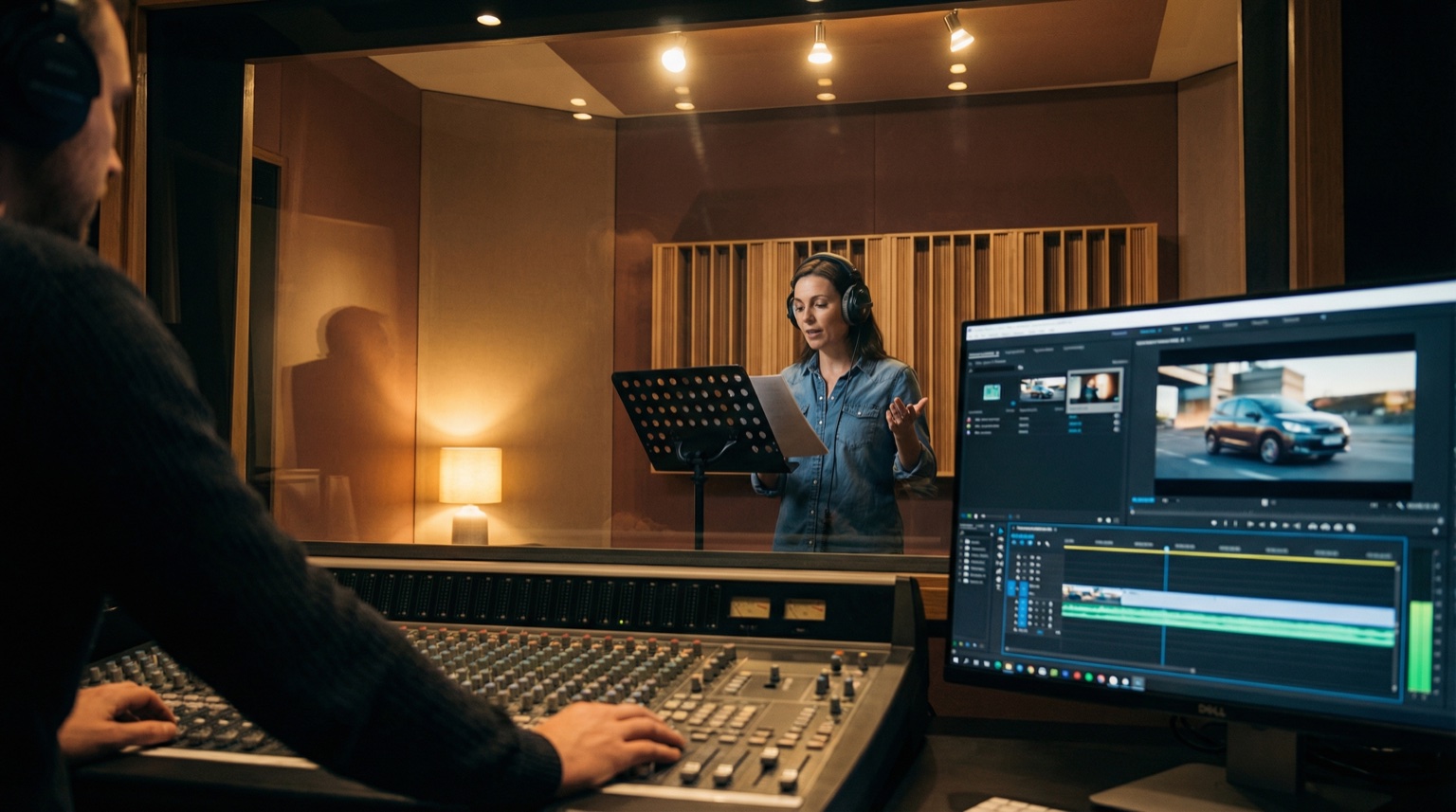
Commercial voice-over is production work with specific technical and legal requirements that differ fundamentally by channel and duration. The choice isn't about finding a "good voice" from a demo reel — it's about matching the script's pacing to the format, defining usage rights upfront, and briefing the talent so delivery is correct on the first take.
What it is
A commercial voice-over is a recorded narration, spokesperson read, or announcer delivery for paid advertising across broadcast or digital channels. Unlike general narration, commercial work has strict time constraints (15, 30, or 60 seconds), defined media placements, and licensing terms that affect production cost.
The voice-over artist doesn't just read copy — they adapt pacing to fit the spot length, take direction on tone and emphasis, and work within the audio engineering requirements of the channel where the ad will run.
How it works
The process starts with a proper brief. You need:
- Script length and target duration — is this a 15-second social clip, a 30-second radio spot, or a 60-second TV commercial?
- Channel and media plan — broadcast TV, cable, radio, YouTube, sponsored content?
- Geographic scope — local, national, or pan-Nordic (which affects talent fee and rights)?
- Usage period — six months, one year, or perpetual?
- Brand tone and context — does the voice anchor a factual claim, or is it friendly/conversational?
Once the brief is clear, the talent records the script in a professional studio. The engineer produces a final mix optimized for broadcast—compressed audio that holds intelligibility and impact in noisy environments or through phone speakers.
When it matters
Commercial voice-over is essential when:
- The script is time-locked to seconds. A 30-second radio spot leaves no room for sloppy pacing. Every word must land precisely to fit the available audio space.
- The ad runs across multiple channels. TV, radio, and digital formats have different audio standards and listener expectations. A voice optimized for 8 AM car radio is different from one meant for late-night YouTube.
- Brand consistency is the goal. A single voice across a campaign builds recognition. Switching voices between spots dilutes recall.
- The script contains facts or claims. A credible, professional delivery anchors trust — especially for financial services, healthcare, or B2B messaging.
- You need specific usage rights. If the ad runs nationally for a year, that's priced differently than a three-month local campaign. Clarity upfront prevents renegotiation later.
What you should do
1. Write the script to the format. Draft copy specifically for the duration. A 30-second script is roughly 75–85 words at conversational pace. If you try to fit 100 words into 30 seconds, the delivery will sound rushed and lose impact. Test the read-aloud duration before briefing the talent.
2. Define the media scope in writing. Specify exactly where the ad will run: TV networks (which ones?), radio stations (which markets?), YouTube, Spotify, or internal use only. If you add channels later without extending the license, you need to renegotiate or pay additional fees.
3. Choose format-appropriate talent. A voice that works for a corporate explainer video may not have the punch needed for a 15-second radio spot. Listen to samples that match your format, not just your brand aesthetic. Demos for commercials should include spot-length examples — 30-second reads, not five-minute narratives.
4. Provide a clear direction brief. Don't leave tone to interpretation. Instead of "friendly," say "warmth without condescension" or "confident but not pushy." Play reference audio if you have it — "like this radio spot from 2018" is more useful than a written description.
5. Agree on revisions upfront. Define how many takes or revised versions are included in the fee. If a client revision requires re-recording (new pacing, different emphasis), clarify whether that's included or billed separately. Standard practice is typically two revisions included; additional takes beyond that are a separate line item.
6. Arrange delivery in the correct format. Commercial work is delivered as high-resolution WAV (at least 24-bit/48kHz), often with stems — voice only on one track, optional background music bed on another. This lets the mixing engineer blend the voice to sit properly in the final ad.
Conclusion
Commercial voice-over isn't generic. It's engineered work with legal and technical specifications. The difference between a good commercial and a poor one often comes down to whether the brief was clear, the script was written to the duration, and the talent understood the specific medium. Rights and usage periods affect cost significantly -- so that conversation belongs at the start, not the end.
Learn more about how I work with commercial voice over -- format, rights and delivery.
For specific details on how commercial usage rights determine pricing, see how voice-over price is calculated. If you're ready to discuss your project, contact me directly — I can advise on format, duration, and the right approach for your campaign.
Frequently Asked Questions
What is the difference between a 15-second, 30-second, and 60-second spot?
The duration dictates pacing and script length. A 15-second spot is roughly 40–45 words at conversational pace, often used for radio drive-time or social media. A 30-second spot is standard for most broadcast TV and radio — approximately 75–85 words. A 60-second spot gives more breathing room for explanation and is common for direct response or explainer ads. The longer the duration, the more you can develop the message; the shorter, the more impact each word must carry.
Do I need different voice talent for TV versus radio?
Not necessarily the same person, but yes, the performance style differs. Radio demands greater vocal expressiveness and clarity since there's no visual context — the voice alone must paint the picture. TV allows for a more naturalistic, conversational delivery because visuals carry some of the messaging load. A skilled professional adapts between both. Choose talent based on the specific channel and listen to examples in that format.
What does "usage rights" mean, and why does it affect price?
Usage rights define where, for how long, and how many times the recording can be aired. A local 90-second radio spot in one market for three months is cheaper than a national TV campaign with one-year duration and unlimited airings. Geographic scope, media type, and campaign length all factor into the license fee. Always agree on usage terms in writing — extending usage without renegotiating creates legal and payment disputes.
How many takes or versions should be included in the fee?
Standard practice is typically two takes or revisions included in a commercial voice-over fee. If the direction changes significantly or the script is revised, additional takes are usually billed separately. Clarify this in the initial quote to avoid surprises.
Can I re-use a commercial recording for a different market or campaign?
No — once the usage period or geographic scope expires, you either need to renegotiate an extension or record new talent. Reusing a recording beyond its licensed terms is copyright infringement and subjects you to legal liability. If you want long-term flexibility, negotiate a perpetual or broader license upfront.
Read more: