
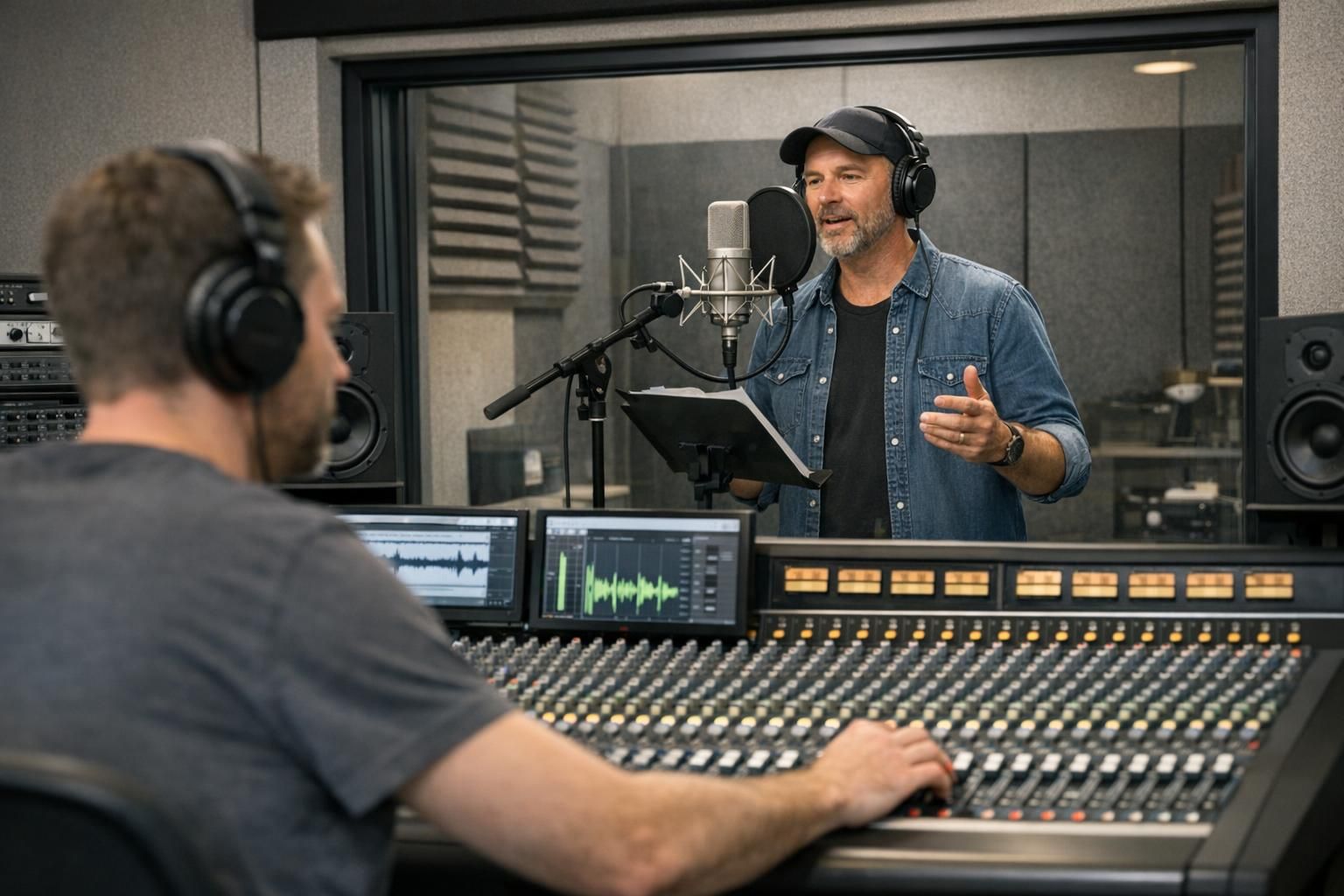
Voice over price is the sum of the voice actor's fee and the cost of usage rights (where, where and how long the material may be used).
The most important points in brief
- A "voice-over price" is rarely right if you don't simultaneously lock in usage: channel, geography and period.
- The cheapest is internal/non-public usage. The most expensive is broad paid reach (advertising) and long usage duration.
- Compare quotes on the same basis: number of words/minutes, language/variant, delivery format, revision rounds and rights.
What is actually included in a voice-over price
When you receive a quote for voice over, it is often two parts that are confused. For procurement it becomes messy, because two suppliers can give the same total amount but with completely different terms.
Part 1 is the actual recording: the voice actor's time, preparation, recording environment and basic post-production (levels, noise, editing). This is “the production”.
Part 2 is usage rights: the right to use the recording in certain channels, in certain countries, for a certain period. This is where the price tends to escalate, and it is also where most buyers “get it wrong” without realizing it. Not out of malice, but because they compare a quote that applies, e.g., to internal training with one that applies to paid social ads in the Nordic region for 12 months.
If you want to be able to compare quotes: always ask that the quote explicitly specifies channel (e.g., web, paid advertising, radio, in-store), geography (Sweden/Nordics/World) and period (3/6/12/24 months or buyout).
Examples of price levels (and why they differ)
Below are examples that reflect how quotes tend to look in real projects. Figures vary between voices, languages, production pace and how much “risk” the supplier takes on in the delivery plan. Use the examples as calibration, not as a price tag.
- Internal training video (not public): often low to medium cost because the rights are limited. Typical setup: a Swedish voice, 1–3 minutes of speech, delivery as a finished WAV. Driver: recording time and number of retakes.
- Explainer on the web (organic, not paid advertising): often medium. Same production as above, but web usage requires rights to be clear. Driver: whether it will also be on YouTube/LinkedIn and whether it counts as “organic” or if it will be run as ads.
- Paid social ad (Meta/YouTube/LinkedIn): often higher, even for short lengths. Driver: paid distribution, reach and period. A 15-second ad may cost more in rights than a 3-minute internal video.
- Radio/TV: often high. Driver: traditional broadcast channels, clear periods and sometimes more versions (taglines, cutdowns). Read more about commercial voice over.
- In-store/phone switchboard: can be anything from low to medium depending on the chain's size and how long it will run. Driver: number of units/locations and period.
What creates the “price gap” is rarely that anyone tries to charge more for the same thing. It is that the usage is different, or unclear.
Price drivers you should ask the supplier to spell out
If you have several quotes and they are not comparable: ask questions that force the parameters. In practice, these are the factors that affect voice-over price the most.
- Channel: internal, web (organic), paid advertising, broadcast, event, in-store.
- Period: how long will you use the voice? 3/6/12 months is common. “Until further notice” is often a buyout and costs thereafter.
- Geography: Sweden vs Nordics vs globally. Global + paid advertising = higher.
- Exclusivity: may the voice actor do similar advertising for a competitor during the period? Exclusivity costs.
- Language/variant: Swedish, English (UK/US), Norwegian, etc. Not all languages are equally easy to staff quickly with the right level.
- Script and amount: number of words/minutes and how “difficult” the script is (names, numbers, technical terms). Short turnaround may still require many takes.
- Delivery requirements: separate files per scene, timing with the picture, different versions/CTAs, naming conventions. It is work, not magic.
- Revision rounds: what counts as re-recording (script change) vs corrections (pronunciation, emphasis)? Get it defined.
A quote that lacks two to three of the points above is difficult to procure in a sensible way, because you don't know what you are buying.
Process / checklist
- 1) Write down the usage: channel, geography, period. If you “might” advertise later, ask for price both with and without paid social.
- 2) Lock the script before recording: small changes afterwards often become a new session. It affects the price more than people think.
- 3) Request quotes for the same package: same language/variant, same delivery format (WAV/48kHz or whatever you need), same number of revision rounds.
- 4) Check the rights wording: should it say “web” or “all digital”? Should it say “organic” or also “paid advertising”? Ask the supplier to write it so a lawyer doesn't have to guess.
- 5) Ensure traceability: who owns the files, where are they delivered, and what applies if you want to extend the period? Ask for the price of extension now.
Next steps
If you compare quotes: start by normalizing them. Ask each supplier to confirm channel, geography and period on one line, and request a separate line for production and rights. Once that's done the differences become understandable and you can make decisions based on budget rather than gut feeling.
If you want to see how I usually package it: rates. If you have quotes on the table and want me to mirror them against the same parameters: contact.
FAQ
Why can two “voice over price” differ so much when the length is the same?
Because length is only a small part of the cost. What often differs are rights: channel (especially paid advertising), geography and period.
If we only plan to use the film on LinkedIn, is it counted as web or advertisement?
Organic publication is usually priced as web/digital. If you run it as a sponsored campaign, it is paid advertising and should be priced accordingly. Request both options if you are unsure.
Can we buy “all rights” so we don’t have to think?
Yes, but it often costs more than you need. For purchases, it’s better to buy rights that match the planned usage and have a clear price for extension or upgrade if the plan changes.
What is a reasonable period to buy?
Commonly 6 or 12 months for campaign material. Internal productions can often run longer without affecting rights in the same way, but it should be stated clearly in the quote.
What happens if we change the script after recording?
Then it’s normally a re-recording (in whole or part). Ask for a clear boundary in the quote: what counts as corrections and what counts as a new session.
How do we avoid buying the wrong rights?
By stating usage in plain text in the quote: “paid advertising/not paid”, countries and time period. If any phrasing feels broad (“all digital channels globally until further notice”) you should assume it costs and ask for narrower alternatives.
Read more: