
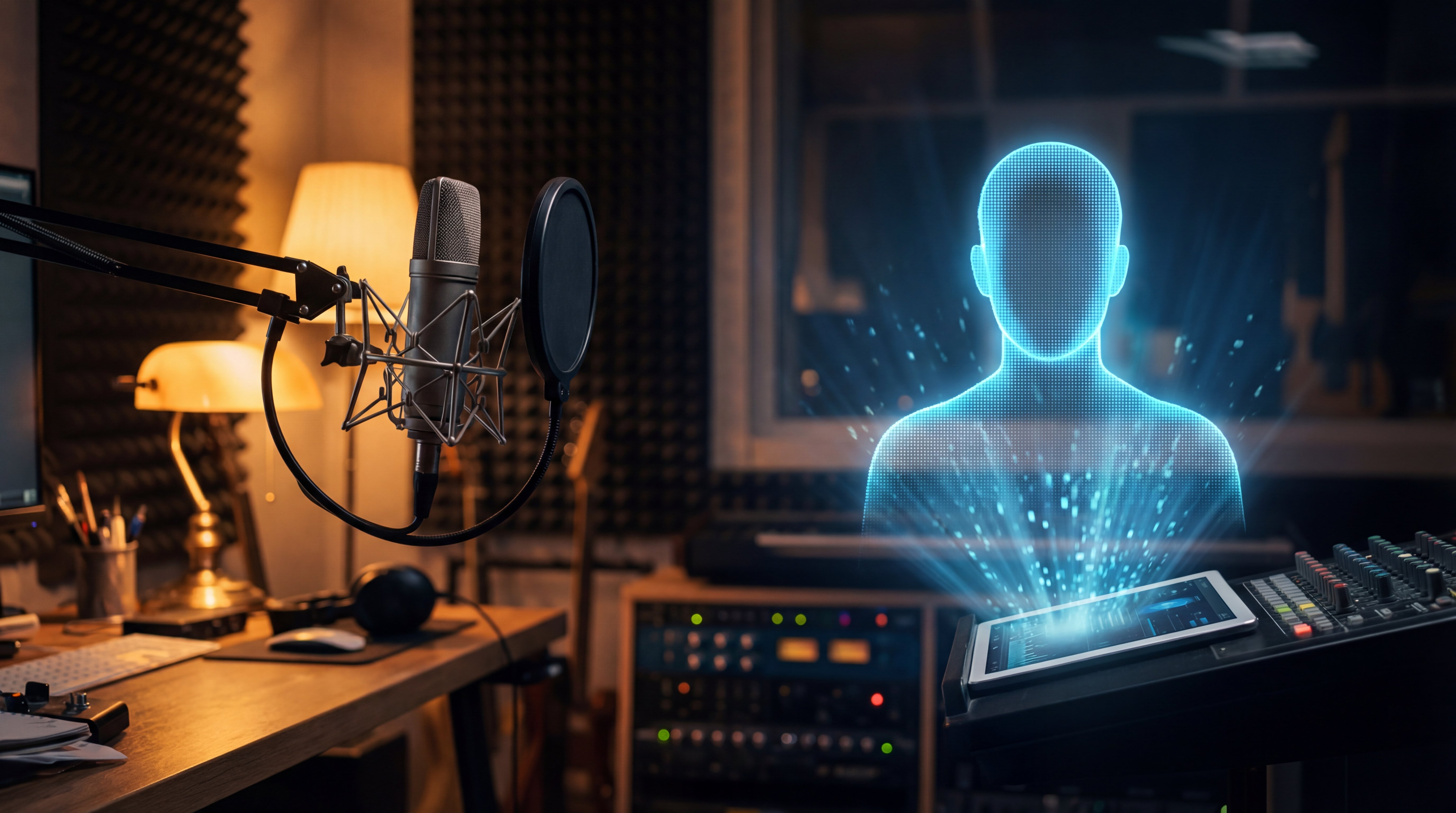
Last summer, I heard my own voice coming out of a speaker — but I hadn't recorded it. Someone had created an illegal AI clone of my voice and used it commercially, without my consent.
Key takeaways
- An illegal AI clone of my voice appeared in commercial material in the summer of 2025.
- My wife recognised the voice immediately — there was no doubt I was the source.
- We got the clone taken down, but never identified the person behind the theft.
- Voice theft via AI is a growing problem that lacks clear legislation in most countries.
How I discovered the clone
It was a perfectly ordinary day. I wasn't searching for anything — I heard it. A voice that sounded like me, but wasn't me. The intonation was right. The pacing was right. The timbre was close enough that my wife, who has heard me speak into a microphone for decades, turned around and stared at me.
"Is that you?"
No. It wasn't.
It was an AI-generated copy. Not perfect — there was something mechanical in the breathing, tiny micro-pauses that didn't land quite right. But the foundation was clearly my voice. My recordings had been fed into a system that produced a version of me I had never approved.
What I did
I contacted the platform hosting the material and demanded it be taken down. It was, after some back and forth. But the person or company that actually created the clone? We never found them.
That's the frustrating part. The voice was removed — but nothing prevents the same thing from happening again, with my material or anyone else's. There are no clear legal tools for voice theft in most countries. In Sweden, copyright law and GDPR provide some protection, but the legislation isn't designed for AI-generated voice clones.
I've tried cloning myself
Ironic? Perhaps. But I've actually tested creating an AI version of my own voice using my own material, with the tools available today. The result: I'm never satisfied.
It's not bad. It sounds like me. But it lacks what makes a recording actually work — the small adjustments in pacing that come from understanding the script, the pauses that give the listener time to follow, the emphasis that signals "this is the important part".
The AI version of me delivers the words. But it doesn't deliver the intent.
Why this matters if you're buying voice over
If you're purchasing voice over today, you should ask yourself two questions:
- Do you know where the voice comes from? An AI voice that sounds good may be built on stolen recordings. That can mean legal risk for you as the buyer.
- Do you have the right to use it? Many AI voice tools have unclear licensing terms. A voice that's "free to use" may be based on material where the rights holder never gave consent.
This isn't a hypothetical scenario. It happened to me — a voice over artist who has worked professionally since 1985 with over 3,500 assignments.
What the industry needs
- Clear legislation that treats voice cloning as the identity theft it actually is.
- Industry standards for how AI voices should be labelled and licensed.
- Technical solutions for tracing and verifying the origin of voices — similar to Content Credentials for images.
Until then, the only protection is to stay vigilant, act quickly, and work with clients and platforms that take the rights question seriously.
My stance on AI voice
I'm not against AI voice. I've written about when AI voice is the right choice and when human voice is needed. There are legitimate use cases where AI makes perfect sense.
But it must happen with consent. My voice is my instrument, my identity, my livelihood. Taking it without asking isn't innovation — it's theft.
Being cloned without consent is not a future risk. It's happening now, to real voices, to real voice over artists. I know, because it happened to me.
FAQ
Is it illegal to clone someone's voice with AI?
It depends on jurisdiction. In Sweden, copyright law and GDPR provide some protection, but legislation isn't specifically designed for AI-generated voice clones. In the US, states like Tennessee (the ELVIS Act) have introduced specific laws against voice cloning.
How can voice over artists protect themselves?
Actively monitor where your recordings are available. Use clear licensing terms that explicitly prohibit AI training. React quickly if you find unauthorised material — document everything, report it, and demand removal.
Can a buyer be held liable for using a cloned voice?
Potentially, yes. If the voice turns out to be based on stolen recordings, it could constitute copyright infringement. That's another reason to work with verified, professional voices with clear agreements.
How good are AI clones really?
Good enough to fool most listeners in short clips. But in longer formats — e-learning, documentary, brand communication — they fall short on nuance, timing, and intent. I've tried cloning myself and I'm never satisfied with the result.
Read more: